
East Milton Concrete: Best Time to Pour a Seasonal Guide
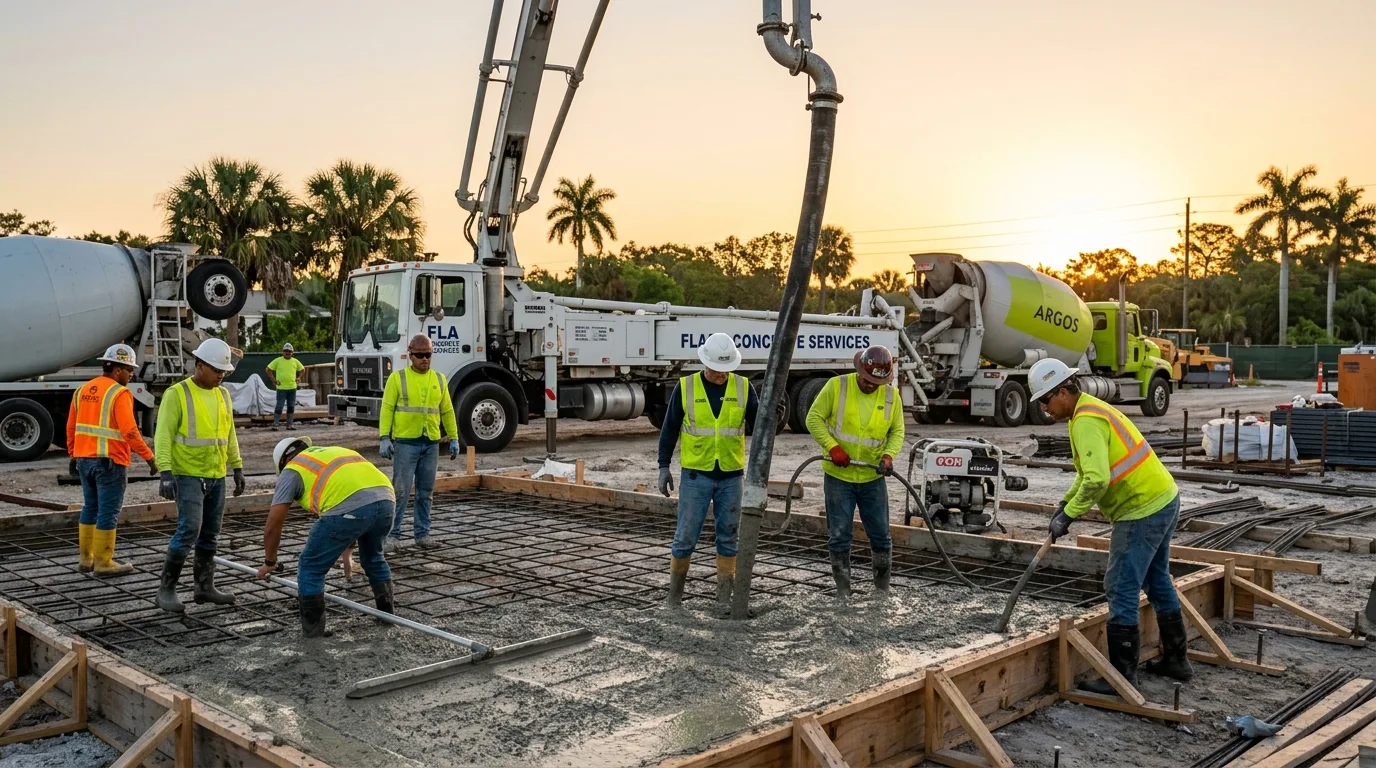
When should you schedule a concrete project in East Milton? The answer matters more than most homeowners realize — concrete poured during the wrong season in the Florida Panhandle cures differently, costs more in some cases, and requires more active management to avoid premature failure. This seasonal guide covers when to schedule concrete work in East Milton, what the summer and winter tradeoffs actually look like, and how to plan your project for the best outcome.
Schedule Your East Milton Concrete Project
East Milton Concrete can guide you on timing and scheduling for any concrete project in Santa Rosa County.
Why Timing Matters for Concrete in East Milton
Concrete curing is a chemical reaction — calcium silicate hydration — that requires water and controlled temperature. The Florida Panhandle’s climate creates specific challenges at both extremes. East Milton’s summer heat and humidity accelerate surface drying, which can cause the top layer to cure faster than the interior. When that happens, the surface layer develops map cracking and surface scaling before the slab even reaches design strength. East Milton’s afternoon thunderstorms from June through September create an entirely different risk: rain hitting fresh concrete before it has set can wash out the cement paste and permanently weaken the surface.
Winter and spring, by contrast, offer lower humidity, more stable temperatures, and far fewer afternoon storms. The longer open time on the surface — before concrete stiffens — gives contractors more working time for finishing, stamping, or texturing. This produces better results, particularly for decorative stamped concrete work where timing precision determines pattern definition and color consistency.
Understanding the concrete repair implications of timing is also important: if you wait until summer to address a crack that developed in spring, you’re compounding the problem with a summer repair that’s harder to execute well than a fall repair would have been.
October Through March: The Preferred Window
October through March is the best time to pour concrete in East Milton. Average highs during this period range from the mid-60s to low 80s, with overnight lows rarely dropping below the mid-40s — well within the optimal 50–90°F curing range. Humidity is meaningfully lower than summer months, reducing the risk of plastic shrinkage cracking during the finishing window. Afternoon thunderstorm frequency drops from daily in summer to occasional in winter.
October and November are particularly good months. You benefit from cool, stable conditions while contractor scheduling is still more flexible than December and January, when holiday season squeezes timelines. February and March offer similarly good curing conditions and often represent the last opportunity before concrete contractors get very busy heading into spring construction season.
Some Santa Rosa County contractors offer 5–10% discounts during the November–January slow period. If your project isn’t urgent, this window can save real money on a concrete driveway or patio installation.
April Through May: Shoulder Season
April and May are workable months in East Milton, though concrete crews need to be attentive to the increasing heat and the onset of afternoon storms by mid-May. Concrete poured in April typically cures well with morning start times before 8am. By May, afternoon thunderstorm risk begins to increase, and experienced contractors monitor forecasts closely and adjust pour timing accordingly.
Spring is also peak scheduling season — the burst of good weather after winter drives high demand. Expect longer lead times to book quality contractors in April and May versus the fall/winter window.
June Through September: High-Difficulty Season
Summer is the most challenging time for concrete work in East Milton. Average highs from June through August reach 90–92°F, with heat indices often exceeding 100°F. Daily afternoon thunderstorms roll in from the Gulf between 2pm and 5pm with high reliability from late June through September. Annual rainfall totals in East Milton exceed 65 inches, with roughly half falling between June and September.
Concrete can still be poured in summer — and experienced local crews do it regularly — but it requires specific adaptations. Pours typically start at 4:30–7am to beat the afternoon heat and storm window. Evaporation retarder is applied to the fresh surface to slow moisture loss. Curing blankets may be used to retain moisture during the critical first 24 hours. Hot weather also affects the concrete mix itself: water demand increases in heat, which can reduce strength if not managed with mix adjustments.
For stamped concrete specifically, summer is the most difficult season. The window between pourable and too-stiff is compressed significantly in summer heat, and mis-timing a stamp can mean a ruined finish on an expensive decorative pour. We strongly recommend scheduling stamped concrete work during the October–March window in East Milton.
Ready to Plan Your East Milton Concrete Project?
Call (888) 376-0955 — we'll help you choose the right time and get it scheduled for optimal results.
Frequently Asked Questions
What months should I avoid pouring concrete in East Milton?
June, July, and August are the most challenging months for concrete in East Milton due to daily afternoon thunderstorms, extreme heat (90°F+), and very high humidity. Work is possible with careful scheduling (early morning pours) but requires more management and is higher risk, particularly for decorative stamped work. September is marginally better but the thunderstorm pattern continues. October marks the beginning of reliable good-concrete weather.
Do concrete contractors offer discounts in winter in East Milton?
Some do — November through January is typically the slowest period for concrete contractors in Santa Rosa County. Homeowners who can schedule during this window sometimes see 5–10% discounts compared to peak spring and fall season pricing. The slower schedule also means more contractor availability and less chance of rushed project timelines. If you’re not in a hurry, late fall is the smartest time to book your concrete driveway or patio project.
Can I pour concrete in rain in East Milton?
No — fresh concrete cannot get wet from rain before it has set, which takes approximately 4–6 hours at minimum. Rain hitting fresh concrete washes out cement paste and permanently weakens the surface. Experienced contractors in East Milton track forecasts carefully and won’t start a pour if afternoon storms are likely. Curing concrete (already set but not fully cured) can handle rain after the initial 24 hours, though saturation during the first 7 days should still be avoided for optimal strength development.
Related: