
East Milton Concrete and Hurricane Season: What to Know
Hurricane Milton struck in October 2025, reminding Santa Rosa County homeowners that storm damage to driveways, patios, and concrete slabs is a real post-hurricane concern. East Milton homeowners know the routine: prepare before the season, assess after each event, and address concrete damage before the next storm compounds existing problems. This guide covers what to do with your concrete before, during, and after hurricane season in East Milton.
Post-Storm Concrete Assessment in East Milton
East Milton Concrete offers free assessments for storm-related concrete damage throughout Santa Rosa County.
How Hurricanes and Tropical Storms Damage Concrete in East Milton
Concrete itself is highly wind-resistant — it won’t blow away. The hurricane damage that matters for concrete in East Milton is indirect, and it comes from three sources.
First, flooding and saturation. East Milton’s sandy soils lose bearing capacity rapidly when saturated. A slow-moving tropical storm that dumps 10–15 inches of rain over 48 hours saturates the sandy loam subgrade beneath driveways and patios to a much greater depth than normal summer thunderstorms. When the water table rises to within inches of the slab underside and then slowly recedes, it can erode fine particles from the sandy subbase — leaving voids beneath the slab that weren’t there before the storm. These voids cause settlement cracking in the weeks following the storm rather than immediately.
Second, debris impact and removal. Chainsaw cuts from storm cleanup, debris dropped during tree removal, and skid-steer or tractor tire damage from debris hauling all create surface damage that looks minor but accelerates deterioration if not sealed. A chainsaw cut across a concrete driveway in Bagdad or Point Baker creates a stress riser that propagates a crack through the entire slab depth if left open.
Third, tree root displacement. Fallen trees and major root ball upheaval near a concrete slab can lift, crack, or completely destroy sections of a patio or driveway. This is particularly common in East Milton’s established neighborhoods where large oak and pine trees are common. Even trees that don’t fall may have roots disturbed by storm saturation that later shift beneath adjacent slabs.
Pre-Hurricane Season Concrete Prep
The best time to address existing concrete problems in East Milton is before hurricane season — ideally in the spring window before June. A crack that’s a quarter-inch wide in May becomes a water infiltration point for every storm event from June through November. Each saturation cycle expands the crack and further undermines the subbase.
Before hurricane season:
- Seal existing cracks — polyurethane joint filler is flexible and water-resistant. Filled cracks can’t expand as rapidly during wet season saturation.
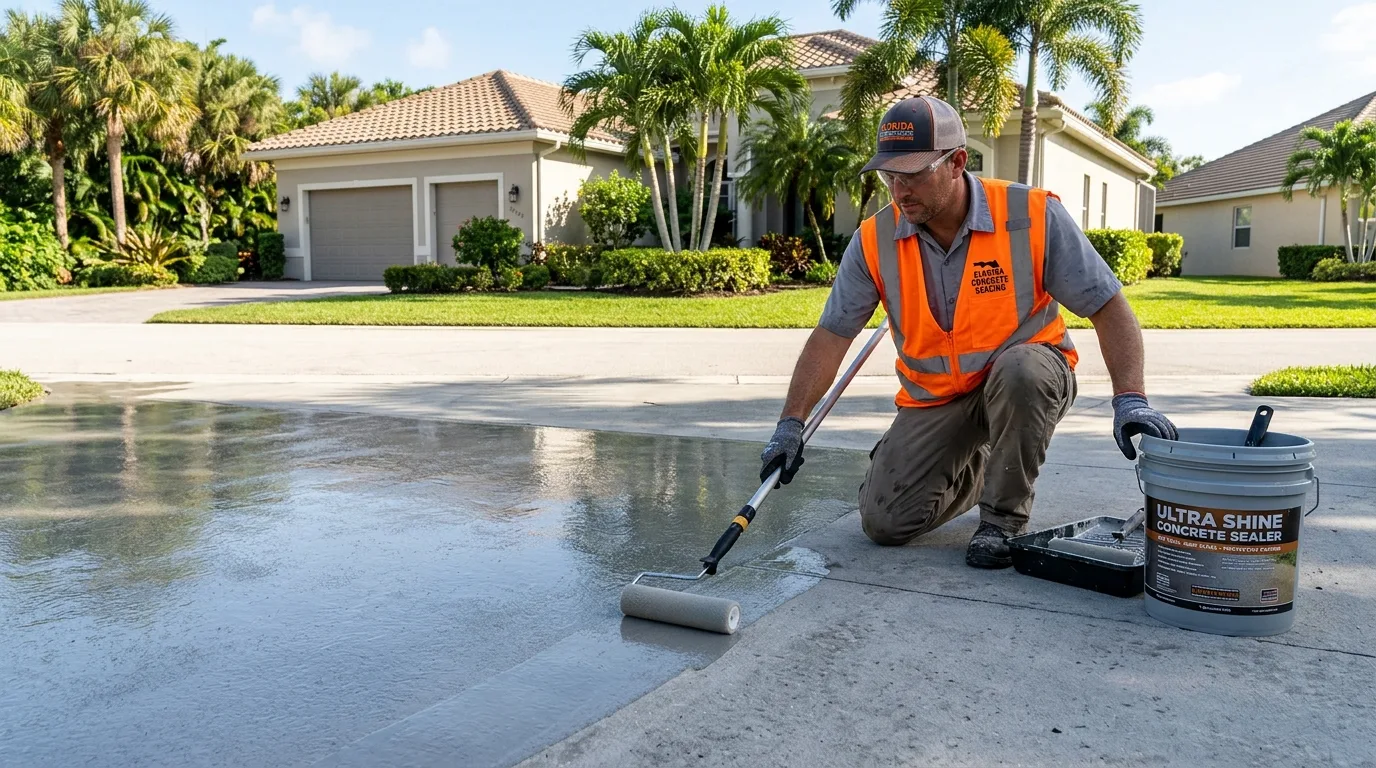
- Reseal the surface — a fresh penetrating concrete sealer applied in spring provides water resistance through the wet season and UV protection through the following year.
- Address drainage issues — low spots where water pools near or on a slab should be corrected before they become saturation points.
- Document the baseline — photograph your driveways and patios before hurricane season. Post-storm, insurance adjusters need baseline photos to document storm-specific damage.
Pre-Season Concrete Sealing in East Milton
Call (888) 376-0955 to schedule pre-hurricane-season concrete sealing and crack repair.
Post-Storm Damage Assessment
After a major storm event in East Milton, walk your concrete surfaces and look for:
New cracks — pay attention to whether cracks developed in areas that were previously clean. Post-storm cracks that appear within 2–4 weeks of saturation often indicate subbase erosion or void formation beneath the slab.
Settlement — use a straightedge or string line to check whether sections of the driveway or patio have dropped relative to adjacent sections. Even a quarter-inch differential settlement is worth investigating. Significant settlement indicates voids that won’t self-correct.
Slab rocking — walk every section of the slab deliberately. Any section that flexes or moves under foot indicates a void beneath it. This is a structural problem that requires either mudjacking or slab replacement, not a surface patch.
Surface damage — note chainsaw cuts, abrasion, impact damage, or debris staining. Most surface damage is cosmetic but should be sealed to prevent water infiltration.
What to Do With Post-Storm Concrete Damage
Minor surface damage — cosmetic scratches, debris staining, minor surface spalling — can typically wait for the contractor’s normal schedule and doesn’t require urgent attention. Seal cuts and chips with flexible filler when time allows.
Structural concerns — settlement, rocking sections, and new mid-slab cracks — warrant a prompt professional assessment. These problems don’t stabilize on their own and worsen with each subsequent rain event. Address concrete removal of damaged sections before they create drainage or safety hazards.
For insurance claims: document everything photographically before cleanup. Most homeowner policies require storm damage documentation before any debris removal or repair work begins.
Frequently Asked Questions
Does concrete crack in hurricanes in East Milton?
Concrete itself rarely cracks from wind forces during a hurricane — it’s the indirect effects that cause problems. Flooding that saturates the sandy subbase beneath slabs creates voids as water recedes, causing settlement cracks in the weeks after a storm. Debris impact and tree root displacement during storm cleanup are also common damage sources in East Milton’s established neighborhoods. Post-storm assessment should occur 2–4 weeks after a major event, not just immediately after, when subbase erosion effects become visible.
Is concrete damage covered by homeowner’s insurance in Santa Rosa County?
Coverage depends on the cause and your specific policy. Storm debris impact damage is often covered. Flooding damage — including subbase erosion that causes settlement — may require separate flood insurance through the National Flood Insurance Program. Gradual deterioration or pre-existing damage is typically excluded. Document everything before cleanup, keep receipts for any emergency repairs, and contact your insurer before beginning major restoration work. Our concrete repair page has more information on what different types of damage look like and what repair involves.
How soon should I repair concrete damage after a hurricane in East Milton?
Surface cosmetic damage — cracks, chip sealing, stain treatment — can typically wait 4–6 weeks for contractor availability to normalize after a major storm. Structural damage — settled sections, rocking slabs, voids confirmed by a professional assessment — should be addressed promptly to prevent worsening through subsequent rain events. Don’t apply surface overlays or resurfacing to a slab with known voids beneath it — the overlay will crack in the same locations and you’ll have paid for a repair that failed within one wet season.
Related: